
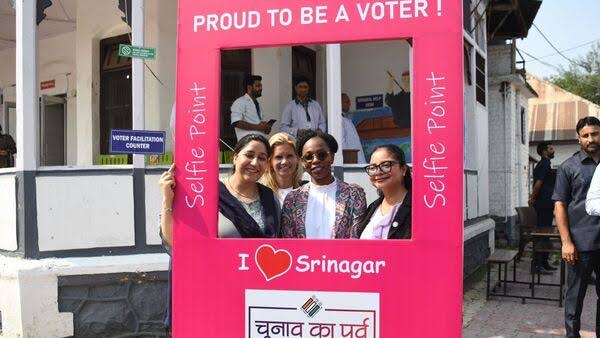
Srinagar, September 25, 2024 – The second phase of the Assembly elections in Jammu and Kashmir concluded with an overall voter turnout of approximately 56.05%, showcasing a mixed bag of voter enthusiasm across different regions. This phase, crucial for setting the political tone in the Union Territory, saw polling across 26 constituencies, split between the Kashmir and Jammu divisions.
The day started with a modest turnout, which progressively increased as the hours passed. By 9:30 AM, the region had recorded a 10.22% voter turnout, which climbed significantly by the end of polling. Srinagar district registered a notably lower turnout at 17.95%, whereas the Shri Mata Vaishno Devi constituency in Reasi led the numbers in the Jammu region with a 75.29% turnout, indicating a robust voter engagement in certain areas.
Foreign diplomats were present to observe the electoral process, a move that has drawn both attention and criticism. This international observation was a first for the region since the revocation of its special status in 2019, reflecting a significant moment in its democratic exercises.
The turnout varied dramatically between the regions. In the Kashmir valley, areas like Budgam and Ganderbal showed moderate participation with around 58.97% and 58.81% respectively, while in contrast, Srinagar’s turnout remained the lowest. Over in the Jammu region, districts like Poonch, Rajouri, and Reasi exhibited high voter interest with turnouts soaring above 70%.
The election, the first assembly poll in over a decade, is seen as a test of the region’s political climate post the constitutional changes. The BJP, NC, and PDP are among the key contenders, with the BJP looking to make inroads in the valley, where it historically has had less influence.
As the region awaits the results, scheduled to be declared on October 8, the varied voter turnout underscores the complex political landscape of Jammu and Kashmir.
The next phases of voting are anticipated with keen interest as they will determine the political future of Jammu and Kashmir, potentially setting the stage for restored statehood or continued central governance.


