
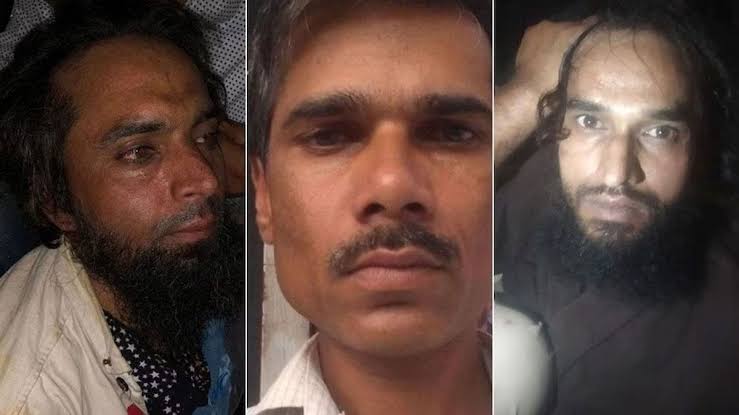
Jaipur, Rajasthan – In a significant development in the 2022 Udaipur tailor Kanhaiya Lal murder case, the Rajasthan High Court has granted bail to Mohammad Javed, one of the accused involved in the conspiracy and reconnaissance for the brutal crime. The decision, handed down on Thursday, September 5, 2024, marks a pivotal moment in the legal proceedings surrounding the murder that had sparked communal tensions across the region.
Mohammad Javed, accused of playing a crucial role by conducting a recce and informing the main perpetrators, Mohammad Riyaz Attari and Ghous Mohammad, about Kanhaiya Lal’s presence at his shop, was granted bail on conditions including a bail bond of Rs 2 lakh and a surety of Rs 1 lakh each. The court’s decision came after reviewing the evidence presented by the National Investigation Agency (NIA), which had arrested Javed in July 2022.
The NIA had argued that Javed was instrumental in the planning phase, providing critical information that facilitated the execution of the murder. However, the court, presided over by Justices Pankaj Bhandari and Praveen Bhatnagar, noted that while there were call details linking Javed to the crime, the NIA failed to conclusively prove his location at the time of the conspiracy or the murder through physical evidence like CCTV footage or direct eyewitness accounts.
Legal experts and observers have noted that this case underscores the complexities of proving conspiracy in legal terms, especially when direct evidence is lacking. The bail granted to Javed has reignited debates over the judiciary’s approach to cases involving national security and communal harmony, with some quarters expressing concern over the implications of such judicial decisions on public perception and safety.
The murder of Kanhaiya Lal, which occurred on June 28, 2022, was motivated by his social media support for a controversial statement made by former BJP spokesperson – Nupur Sharma, leading to widespread condemnation and communal unrest. The case, taken over by the NIA, has been a flashpoint for discussions on freedom of speech, Islamic intolerance, terrorism and the rule of law.
This judicial outcome might influence how similar cases are approached in the future, particularly in balancing the scales between individual rights and societal security. As the legal battle continues, with other accused still facing trial, the Kanhaiya Lal murder case remains a poignant reminder of the challenges India faces in managing communal harmony and upholding justice.


