
Srinagar, Jammu and Kashmir – In a significant political development in Jammu and Kashmir, US diplomats, including high-ranking officials like Minister-Counselor for Political Affairs Graham Mayer, met with Omar Abdullah, the Vice President of the National Conference (NC) and former Chief Minister, at his residence in Srinagar. This meeting comes at a crucial time, just after the announcement of the assembly elections in Jammu and Kashmir, scheduled to take place in three phases on September 18, September 25, and October 1, with results to be declared on October 4.
The timing of this diplomatic engagement has sparked various reactions and concerns among political observers. While a post from JKNC official handle on Social media platform X (Formerly Twitter) states “Omar Abdullah emphasized to the diplomats the importance of re-looking at the travel advisories for Jammu and Kashmir with a view to easing the restrictions. He encouraged people from around the world to visit Kashmir and experience its beauty and culture firsthand. He also invited the diplomats to visit Kashmir with their families as a first step to inspire confidence among tourists from the United States and other parts of the world“; Critics have expressed worries over potential foreign interference in Indian domestic politics, especially given the sensitive history of the region following the abrogation of Article 370 in August 2019, which stripped Jammu and Kashmir of its special status.
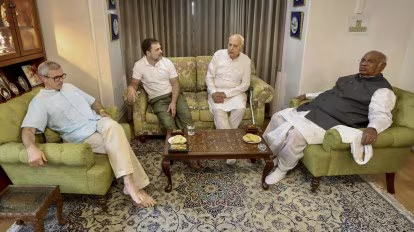
Parallel to this diplomatic outreach, the political landscape in Jammu and Kashmir is witnessing a notable alliance formation. The National Conference and the Congress Party have confirmed their decision to forge a pre-poll alliance, aiming to contest all 90 assembly seats together. This alliance was finalized after meetings between senior leaders from both parties, including Rahul Gandhi and Mallikarjun Kharge from Congress, and Farooq Abdullah and Omar Abdullah from NC. The discussions not only cemented the alliance but also touched upon key issues like the restoration of statehood to Jammu and Kashmir, a point emphasized by Rahul Gandhi as a priority for both his party and the broader INDI Alliance.
As per latest reports, The National Conference (NC) and the Congress party have agreed on a seat-sharing arrangement for the upcoming Jammu and Kashmir Assembly elections. Out of the 90 seats, NC will contest 51, Congress 32, with five seats designated for a friendly contest. Additionally, one seat each has been allocated to the Communist Party of India (Marxist) and the Panthers Party. This alliance aims to consolidate their position against the Bharatiya Janata Party (BJP), which has declared 16 candidates so far. The alliance between NC and Congress is seen as an effort to present a united front, aiming to preserve regional political integrity and challenge the BJP’s influence in the region.
The meeting between US diplomats and Omar Abdullah has been interpreted by some as an attempt to gauge or influence the political climate in Jammu and Kashmir. On X, sentiments range from caution to outright suspicion about the intentions behind such diplomatic moves, especially in the context of recent political realignments and the upcoming elections. In J&K, it literally looks like a contest between US Deep State + ISI + INDI Alliance vs BJP. For BJP, it appears as a no win situation regardless of how they perform in the elections. It doesn’t seem to be right time to conduct Assembly Elections in J&K just as yet. The stake is too high as an adverse result could simply undo every positive gain made out of abrogation of Article 370 to restore peace, prosperity and development.
This blend of international diplomatic interest and local political alliances underscores the complex dynamics at play in Jammu and Kashmir as it heads towards its first assembly elections since its reorganization into a Union Territory. The outcomes of these elections, influenced by both local alliances and international observations, will be closely watched as indicators of the region’s political direction post the significant changes of 2019.


