
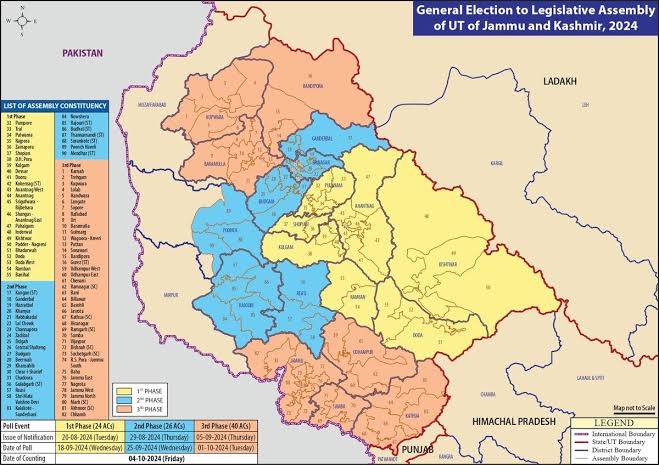
The first phase of the Jammu and Kashmir Assembly elections, a significant event following the abrogation of Article 370, concluded with a remarkable voter turnout, signaling robust public engagement in the democratic process.
According to reports from the Chief Electoral Officer P.K. Pole, the voter turnout hovered around 59%, with some sources suggesting this could fractionally increase. This figure not only reflects the highest turnout in recent election history for the region but also underscores a peaceful and enthusiastic electoral atmosphere.
Kishtwar district led with an impressive turnout of 77%, showcasing the highest voter engagement, while Pulwama recorded the lowest at 46%. This variance in turnout across different districts highlights the complex political and social fabric of Jammu and Kashmir, where local issues, security concerns, and political dynamics play significant roles in voter behavior.
The elections, which began amidst much anticipation, were marked by a peaceful polling process, with no significant incidents that would necessitate a repoll. This peaceful conduct has been attributed to heightened security, mass voter awareness campaigns, and perhaps, a collective desire for change or stability depending on one’s perspective.
Political observers and analysts are interpreting this turnout in various lights. For some, it’s a vindication of the “Naya Jammu and Kashmir” narrative, suggesting that changes following the revocation of special status could be seen in a positive light by a significant portion of the electorate. Others see it as a reflection of the people’s determination to shape their future, regardless of past political upheavals.
The elections saw a mix of established political figures and new entrants, with notable candidates including M.Y. Tarigami of CPI(M), Iltija Mufti representing the PDP, and independent candidates backed by various ideologies. The presence of these candidates indicates a diverse political landscape, where traditional alliances are being tested against new political configurations.
However, the high turnout and the political atmosphere also raise questions about the future political landscape of J&K. Will this enthusiasm translate into a mandate for change, or will it reinforce the status quo? The outcomes could have profound implications for not just local governance but also for national politics, given J&K’s strategic importance.
The second phase of the elections is poised to reveal further insights into voter sentiment across the Union Territory. As political parties analyze this phase, strategies might shift, focusing more on ground-level issues like development, security, and identity, which seem to resonate deeply with the electorate.
This election phase not only marks a significant step towards normalcy in J&K’s political life but also sets a stage for how democracy functions in regions with complex socio-political histories. The coming phases will be watched closely, not just within India but internationally, as an indicator of political stability and democratic health in one of the world’s most militarized zones.


