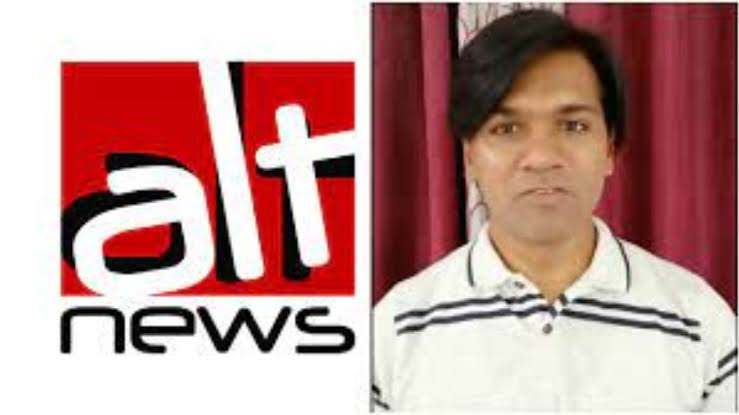
Ghaziabad, October 7, 2024 – In a recent development that has stirred considerable debate across India, Mohammed Zubair, co-founder of the fact-checking website Alt News, finds himself at the center of controversy yet again. An FIR has been lodged against him, accusing him of inciting violence that led to threats against the Dasna Devi Temple in Ghaziabad, Uttar Pradesh. This incident not only highlights the ongoing tensions between different religious communities but also brings to the forefront the discussion on the limits of free speech and the role of influential figures in public discourse.
The Incident in Question The Dasna Devi Temple has been a focal point of communal tensions for some time, but recent events escalated when chants of “Sar Tan Se Juda,” literally meaning “Separation of Head from Body”, a phrase that has been associated with calls for beheading, were reported outside the temple. This phrase, deeply rooted in a culture of Radical Islamic threats, was allegedly encouraged and supported by Zubair through his social media activities. In the past also, Zubair’s tweets and posts have a pattern of inciting reactions that could easily flare up into communal violence.
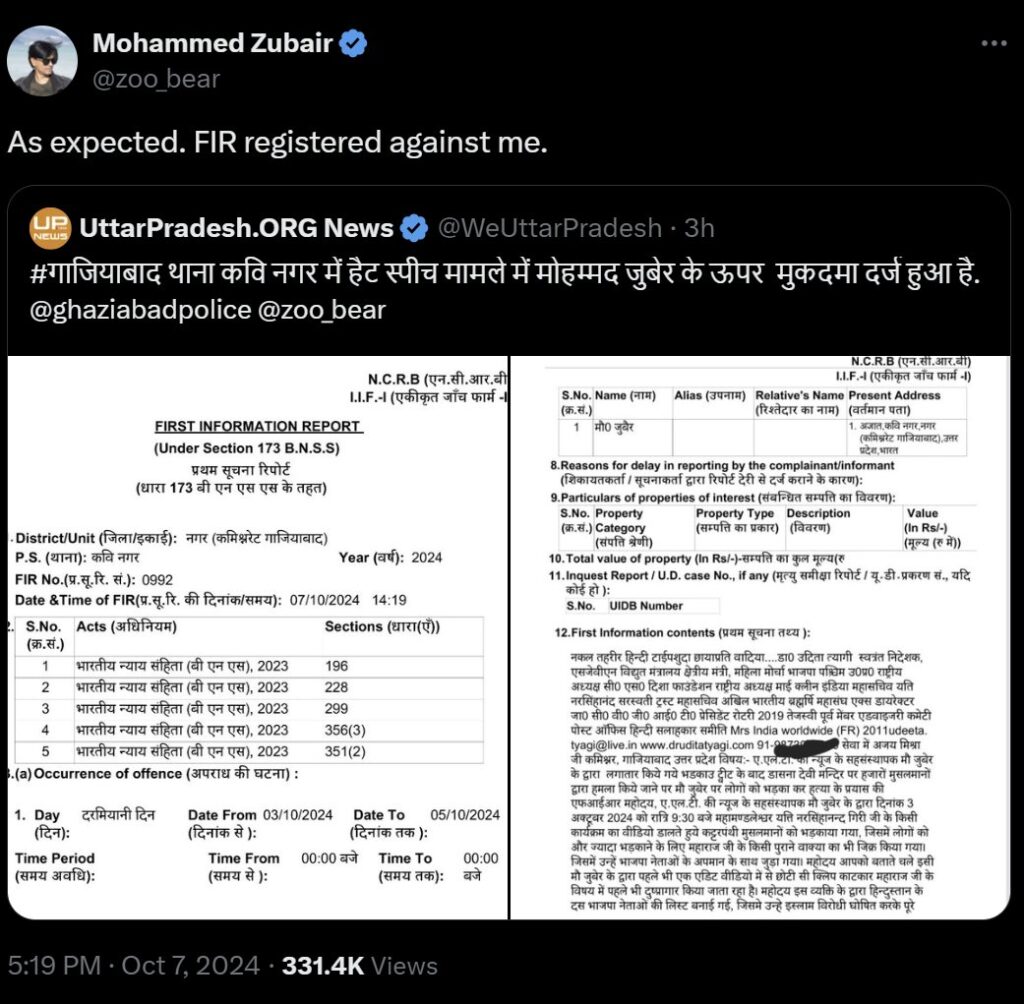
Zubair’s History and Public Persona Mohammed Zubair has been both hailed as a champion of free speech and criticized as a provocateur. His work with Alt News primarily involves “debunking misinformation”, as he claims. However, his methods and the selective nature of his fact-checking have repeatedly come under scrutiny. Zubair’s focus has disproportionately targeted Hindu nationalists while giving a pass or less scrutiny to misinformation spread by Islamists and left wingers, which contributes to an atmosphere where mob mentality, particularly from Islamic extremists, feels emboldened. Infact on many occasions, he has been alleged of “Dog Whistling” Islamic Mobs to target and threaten certain Hindu influencers and activists.
The Culture of Mob Violence The incident at Dasna Temple reflects a broader issue plaguing not only India but the whole civilized world: the culture of Islamic mob violence, often justified or ignited by religious sentiments. This culture, unfortunately, isn’t new but has seen a resurgence with the advent of social media, where influencers like Zubair hold significant sway. Herein lies the criticism: when figures with substantial followings make statements or share content, the implications can extend far beyond mere speech, potentially gaslighting and inciting real-world violence. Critics argue that Zubair knowingly plays into this dynamic. His critics point out that while he positions himself as a defender of secular values, his actions might inadvertently fuel the very fires he claims to douse. The “Sar Tan Se Juda” chants are not just words but a call to violence that has historical and emotional weight, often leading to actual harm as seen in case of gruesome Kanhaiya Lal Beheading on 28 June 2022 in Udaipur, Rajasthan .
Opinion: The Responsibility of Influence The case against Zubair raises poignant questions about responsibility. Freedom of speech is a cornerstone of democracy, but with great power comes great responsibility.
When does critique cross into incitement? Zubair’s case might be seen by some as an example of this line blurring. While he has the right to criticize and fact-check, the manner and context in which he does so might need a reevaluation if it leads to or encourages violence, directly or indirectly.
Moreover, there’s an underlying issue with the culture of Islamic mob violence that often goes unaddressed in mainstream discourse. The reluctance to criticize or thoroughly analyze this phenomenon for fear of being labeled “Islamophobic” does a disservice to genuine efforts at peace and coexistence.
The attack on Dasna Temple, if linked to incitement via social media influencers like Zubair, suggests a failure not just of individual responsibility but of societal introspection on how religious extremism, from any side, is handled or mishandled in public narratives.
Conclusion The FIR against Mohammed Zubair for the Dasna Temple incident could be a watershed moment for how India views the influence of social media personalities on communal harmony. While Zubair’s defenders see this as an attack on free speech, his critics view it as a necessary scrutiny of how influential figures might contribute to a culture of violence.
This case should prompt a broader discussion on the ethics of influence, the balance between freedom and responsibility, and the urgent need for a discourse that doesn’t shy away from criticizing any form of religious extremism. Whether Zubair is guilty of incitement or is a victim of his outspokenness remains for the courts to decide, but the conversation around these issues must evolve, fostering a culture where critique does not equate to encouraging violence, and where all forms of extremism are equally scrutinized and condemned.