
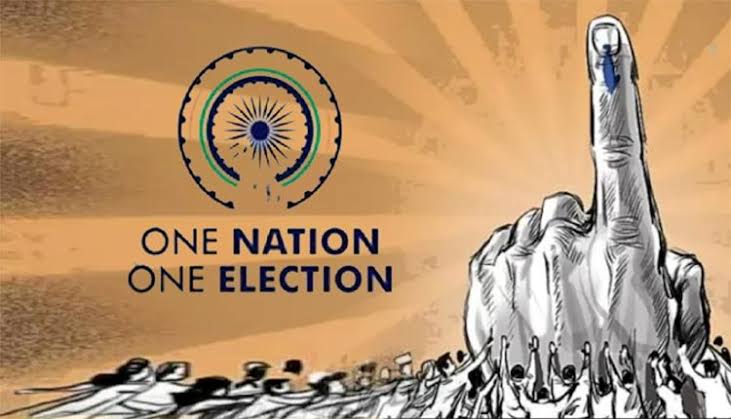
New Delhi, September 16, 2024 – In a move that could significantly alter India’s electoral landscape, the Narendra Modi-led government is poised to introduce the ‘One Nation, One Election’ bill in the next session of Parliament. This legislative proposal aims to synchronize the elections for the Lok Sabha, state assemblies, and potentially even local bodies, marking a historic shift towards holding simultaneous elections across the nation.
The concept of ‘One Nation, One Election’ has been a long-standing agenda of the Bharatiya Janata Party (BJP), with Prime Minister Narendra Modi advocating for it as a means to reduce the cost of conducting elections, minimize the disruption caused by the frequent imposition of the model code of conduct, and enhance governance by ensuring policy continuity. The idea, while not new, was last practiced in India until 1967.
The decision to push forward with this bill comes after a high-level committee, headed by former President Ram Nath Kovind, submitted its report on March 13, 2024. The report suggested mechanisms for synchronizing election cycles, including setting a fixed date for the first sitting of the Lok Sabha post-election as the starting point for this synchronization.
This approach would require constitutional amendments, particularly to Articles 83, 85, 172, 174, and 356, along with changes to the Representation of the People Act, 1951. The introduction of this bill has sparked a mix of reactions across the political spectrum.
While supporters argue it would lead to significant savings, both in terms of financial resources and administrative efficiency, critics, including opposition parties, express concerns over the potential erosion of federalism. They argue that such a system might not adequately represent regional issues or allow for the flexibility that state-specific elections provide.
The opposition has also raised flags over the implications for smaller parties and regional politics, suggesting that national issues might overshadow state-specific concerns, potentially benefiting larger national parties at the expense of regional ones. Legal experts like Senior Advocate Gopal Sankaranarayanan have pointed out that implementing this change would necessitate a constitutional amendment, which requires a two-thirds majority in both houses of Parliament and ratification by at least half of the state legislatures, highlighting the complexity of the process.
Despite these challenges, the Modi government’s resolve to move forward with this bill indicates a strategic push towards what they describe as electoral reform aimed at strengthening national unity and administrative efficiency. The upcoming session of Parliament is expected to be contentious, with discussions not only on the feasibility and legal aspects of ‘One Nation, One Election’ but also on its political implications.
As India watches this unfold, the debate over ‘One Nation, One Election’ is set to dominate political discourse, reflecting on the balance between central governance and state autonomy, the cost of democracy, and the very nature of federalism in the world’s largest democracy.


